
Ants are the most common reason American homeowners call for pest help, and they are also one of the most commonly mishandled. A line of ants on the kitchen counter is only the visible tip of a colony that may hold thousands of workers, one or many queens, and a nest hidden in a wall void, under a slab or out in the mulch. Spray the trail and the problem usually looks solved for a day or two before it comes back, sometimes worse than before.
This guide covers the approach professionals use, scaled for a homeowner: identify the species, track the colony, bait correctly, treat the exterior and prevent a return.
- Identify the species first. Sugar-feeding odorous house ants, grease-loving pharaoh ants and wood-nesting carpenter ants each need a different strategy.
- Do not spray ant trails with repellent insecticides. It scatters the workers and can cause some species to split into multiple colonies.
- Slow-acting baits work because workers carry them back and share them with the queen and the brood. Expect results over several days to a couple of weeks, not hours.
- Pair indoor baiting with exterior work: trimming vegetation, pulling mulch back from the foundation and sealing entry points.
- Carpenter ants and fire ants justify professional help sooner, because of structural damage and stings respectively.
Identify the Ant Before You Treat It
Most ant products are labeled for broad use, but the strategy that works depends heavily on what species you are dealing with. Workers of the same colony can vary in size, so look at several ants and note color, size, where you found them and what they were eating. The table below covers the six species that cause the most trouble in US homes. For photos and more detail on other pests, browse our pest library.
| Species | Appearance | Where they nest | Preferred food | Best control approach |
|---|---|---|---|---|
| Odorous house ant | Small (about 1/8 inch), dark brown to black; smells like rotten coconut when crushed | Wall voids, under floors, mulch, under stones; colonies move often | Sweets, honeydew, some protein | Liquid or gel sugar baits indoors and out; exterior perimeter non-repellent treatment |
| Pavement ant | Small, dark brown to black, fine parallel grooves on head and thorax | Cracks in pavement, under slabs, along foundations | Very broad: grease, sweets, crumbs, pet food | Baits placed along slab edges and expansion joints; seal cracks |
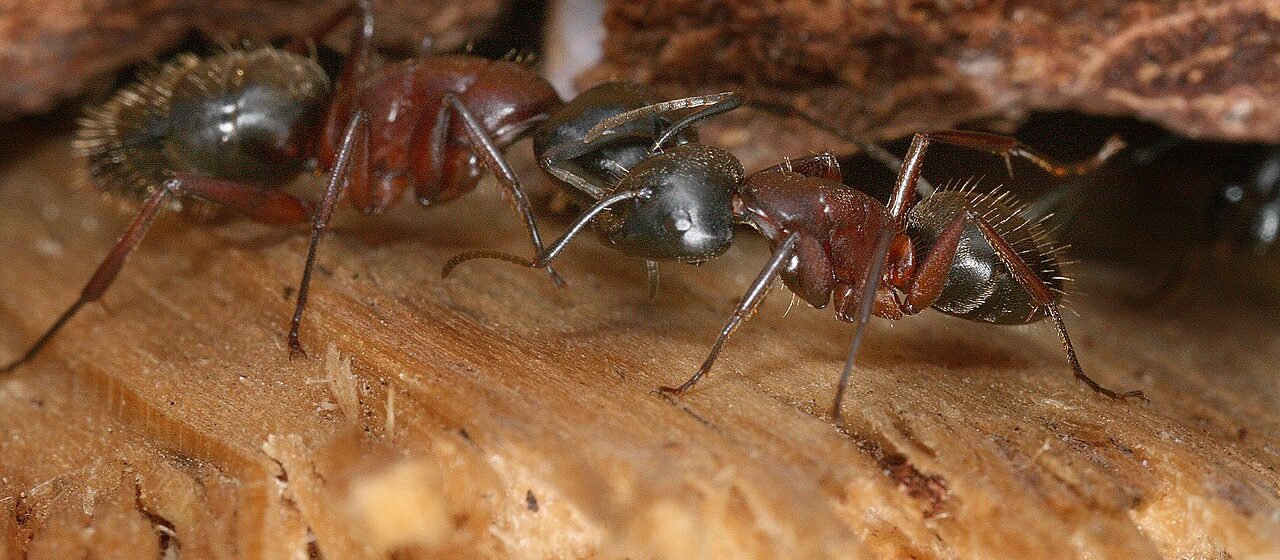
| Carpenter ant | Large (1/4 to 1/2 inch), usually black or black and red; evenly rounded thorax | Moist or damaged wood, hollow doors, insulation; satellite nests indoors | Honeydew, sweets, other insects | Locate and treat nests directly; fix moisture; non-repellent perimeter treatment |
| Red imported fire ant | Reddish-brown, varied sizes in the same mound | Soil mounds in sunny lawns, often after rain; mainly southern states | Protein, oils, sweets | Broadcast fire ant bait over the yard, then treat individual mounds |
| Argentine ant | Small, light to dark brown, no odor when crushed | Moist soil, mulch, under boards; huge interconnected colonies | Sweets and honeydew | Exterior baiting and non-repellent perimeter; reduce aphids and scale on plants |
| Pharaoh ant | Tiny (about 1/16 inch), pale yellow to light brown | Warm hidden spots indoors: wall voids near heat, behind appliances, outlets | Grease, protein, sweets | Baits only; never spray, as it triggers colony splitting (budding) |
Ants or termites?
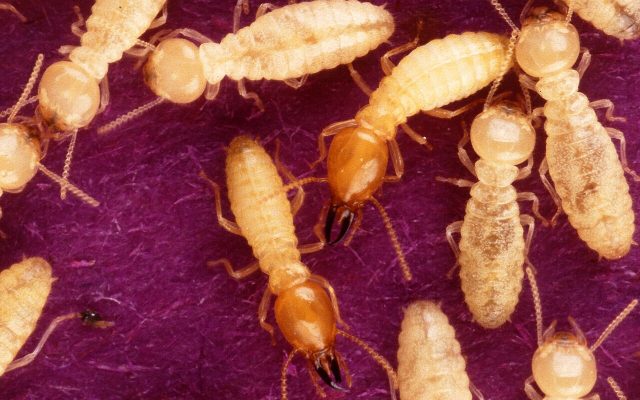
In spring, winged ants and winged termites swarm at roughly the same time, and homeowners confuse them constantly. Ants have a pinched waist, elbowed antennae, and front wings longer than the hind wings. Termites have a thick, straight waist, straight beaded antennae, and four wings of equal length that break off easily. If you find piles of shed wings on windowsills, read our guide to termite warning signs before assuming it is an ant problem.
Find the Colony, Not Just the Trail
Ants follow pheromone trails between food and the nest, which makes the trail your best tool for locating the colony. Before you do anything else, spend a few minutes watching.
- Put out a test bait. Place a small dab of honey or jelly and a small piece of greasy food (a bit of peanut butter or tuna) near the activity. Which one draws the ants tells you whether they are currently feeding on sugar or protein, which guides bait selection.
- Follow the trail at its busiest. Many species are most active in the evening. Use a flashlight and follow workers carrying food, since they are headed home.
- Check entry points. Ants often enter along plumbing penetrations, window and door frames, utility lines and branches touching the roof.
- Look outside. Most indoor ants forage from an outdoor nest in mulch beds, under stones or along driveway edges.
- Note moisture. Indoor nests are often near leaks under sinks, around dishwashers and in rotted window frames.
Why Spraying Ant Trails Backfires
Visible foragers are typically a small fraction of the colony. Killing them with an aerosol does nothing to the queens or the brood, and the colony simply produces more workers.
Worse, most over-the-counter sprays are repellent. Ants detect the residue and reroute, often into a different room. With multi-queen species such as pharaoh ants, and to a degree Argentine and odorous house ants, the stress can trigger budding: workers carry brood and a queen off to start a new nest, and one colony becomes several.
Repellent residue also deters ants from baits placed later. If you have already sprayed, wipe the surfaces with soapy water before baiting, or bait a short distance away.
How to Use Ant Baits Correctly
Baits combine a food attractant with a slow-acting insecticide. Workers eat the bait, return to the nest and share it through trophallaxis (mouth-to-mouth food sharing) with other workers, larvae and queens. Because the active ingredient works slowly, it spreads through the colony before the carriers die.
Choosing a bait
- Liquid sugar baits are the first choice for odorous house ants and Argentine ants, which feed heavily on sweet liquids.
- Gel baits are easy to place in cracks, along baseboards and near entry points. Many are formulated to appeal to both sugar- and protein-feeding ants.
- Protein or grease baits work better for pavement and pharaoh ants, and for many species during spring when colonies are raising brood.
- Granular baits are used outdoors, especially for fire ants, where they are broadcast over the lawn so foraging workers pick them up.
Placement tips
- Put baits directly on or beside active trails, using several small placements, and refill them when empty.
- Do not clean the trail until the ants are gone; the pheromone trail leads more workers to the bait.
- Remove competing food and fix dripping faucets.
- Be patient. Activity usually drops within a few days and should be largely gone in one to two weeks for a single colony.
- If ants ignore the bait, switch formulations. Food preferences shift with the season.
Always read and follow the product label, keep bait stations where children and pets cannot reach them, and use only products labeled for indoor use inside the home.
Fire ants sting repeatedly and inject venom, producing painful pustules. Some people have severe allergic reactions to stings. Seek emergency medical care immediately for swelling of the face or throat, difficulty breathing, dizziness or widespread hives, and see a doctor for any sting reaction that worries you. Do not disturb mounds with bare hands or stand on them, keep children and pets away, and never use gasoline or other improvised chemicals on mounds. When applying any insecticide, follow the label exactly, wear the protective equipment it specifies, and store products in their original containers out of reach of children.
Treating the Exterior Perimeter
Because most indoor ant problems start outside, a solid exterior plan prevents reinfestation. This is where professionals typically get long-lasting results.
- Non-repellent perimeter treatments. Ants cannot detect these insecticides, so workers walk through the treated band and carry the active ingredient back to nestmates. They are applied along the foundation and entry points according to label rates.
- Outdoor bait stations. Placed along trails in mulch beds, they reduce foraging pressure before ants reach the house.
- Vegetation management. Trim shrubs and limbs so they do not touch the siding or roof. Keep mulch thin and pulled back several inches from the foundation.
- Control honeydew producers. Aphids and scale insects on landscape plants feed large ant populations.
- Seal entry points. Caulk gaps around windows, door frames and utility penetrations, and repair door sweeps.
Carpenter Ants: When Ants Damage Your Home
Carpenter ants do not eat wood. They excavate it to build nests, pushing out a sawdust-like material called frass that often contains insect parts and bits of insulation. They strongly prefer wood softened by moisture, so their presence often points to a leak, poor ventilation or rot.
Signs of carpenter ants
- Large black or black-and-red ants indoors, especially at night or in spring.
- Small piles of coarse frass below baseboards, window frames, door frames or in the attic.
- Faint rustling sounds inside walls in quiet conditions.
- Winged ants emerging indoors in late winter or spring, which indicates a mature colony inside the structure.
- Smooth, clean galleries inside damaged wood (termite galleries are rough and often packed with mud).
Colonies often have a parent nest outside, such as in a stump, plus satellite nests in the house. Control means locating and treating nests directly and fixing the moisture problem. Damage builds slowly, but a colony left for years can weaken framing. Our pest control services include inspection and targeted treatment.
Prevention: Keeping Ants Out for Good
- Kitchen hygiene. Wipe counters nightly, rinse recyclables and do not leave dirty dishes overnight.
- Food storage. Keep sugar, cereals, syrups and pet food in airtight containers.
- Moisture control. Fix leaks, clear gutters and direct downspouts away from the foundation.
- Firewood and debris. Stack firewood off the ground and away from the house, and remove stumps and dead wood.
- Seasonal checks. Inspect the perimeter early in spring. Our seasonal pest control calendar lays out what to check and when.
When to Call a Professional
Call a professional when ants return after two or three weeks of correct baiting, when you suspect carpenter ants in the structure, when fire ants are active where children or pets play, or when pharaoh ants spread through a multi-unit building.
Frequently Asked Questions
Why do I see more ants after putting out bait?
That is expected. Bait attracts foragers, and they recruit more workers to the food source. Leave the bait in place, keep it refilled, and activity should drop over the following days as the active ingredient spreads through the colony.
Do vinegar, cinnamon or other home remedies get rid of ants?
Vinegar or soapy water can wipe away pheromone trails and kill ants on contact, and some scents may briefly deter them. None of these reach the queen or the nest, so they do not eliminate a colony. They can be useful for cleanup after baiting has done its work.
How long does it take to get rid of ants?
For a single colony of a common species, correct baiting often shows a clear drop within a few days and control within one to two weeks. Multi-queen species, large Argentine ant supercolonies and carpenter ants in a structure can take several weeks and usually benefit from professional treatment.
Are carpenter ants as bad as termites?
Carpenter ants usually cause damage more slowly than a large termite infestation, and they excavate rather than eat wood. Still, a long-established colony can weaken framing, and their presence often signals a moisture problem that needs fixing. Treat them seriously and have suspected nests inspected.
Ants Keep Coming Back?
A local ETAAC technician can identify the species, locate the colony and set up a bait and perimeter plan that targets the source, not just the trail. Tell us what you are seeing and we will match you with a contractor in your area.