
A wasp nest under the eaves or a stream of yellow jackets flying in and out of a hole in the lawn can turn a backyard into a no-go zone. Not every stinging insect is equally dangerous, though. Some species are relatively docile and nest in small, open combs; others defend large hidden colonies aggressively and can sting repeatedly. Knowing which one you are dealing with tells you whether a careful DIY treatment is reasonable or whether the nest should be left to a professional.
This guide explains how to tell the common species apart, where each one nests, the safety precautions that matter most, and how to keep new nests from appearing next season.
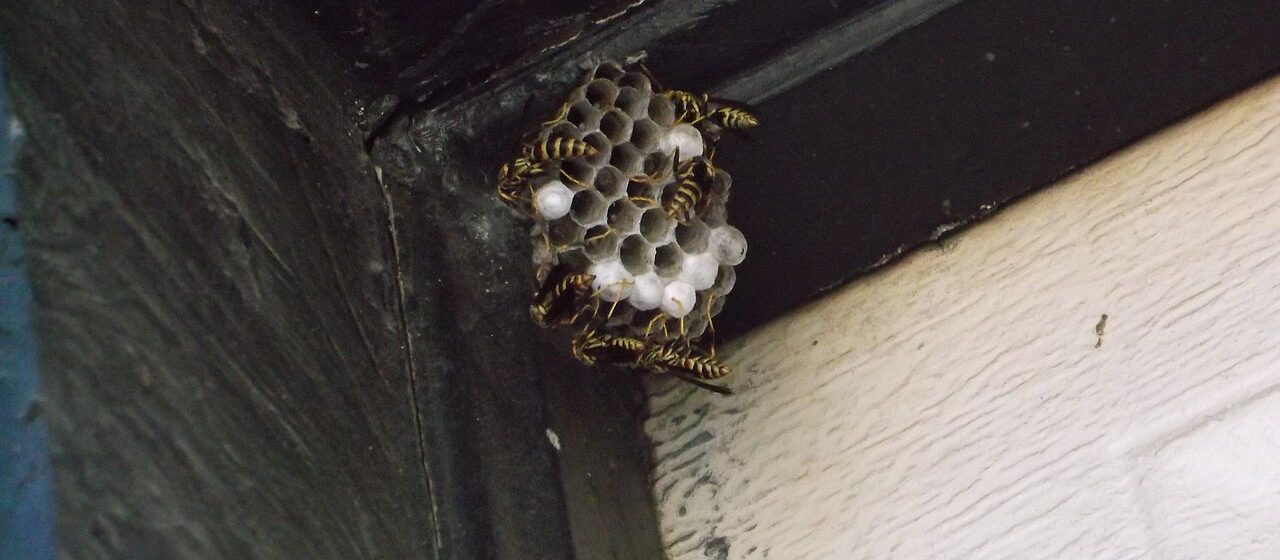
- Paper wasps build small, open, umbrella-shaped combs; yellow jackets and hornets build enclosed paper nests that can hold thousands of insects.
- Yellow jackets nesting in the ground or in walls are among the most hazardous nests to treat yourself.
- Anyone with a known sting allergy should never attempt removal and should keep prescribed emergency medication on hand.
- Early-season nests are small and easier to deal with; late-summer colonies are at their largest and most defensive.
Wasp, Hornet or Yellow Jacket? How to Tell Them Apart
All of these are wasps in the broad sense. “Hornet” and “yellow jacket” are common names for particular groups. Unlike honey bees, which are generally fuzzy and lose their stinger after stinging, these insects have smooth bodies and can sting more than once. Our pest library has more identification details.
| Insect | Appearance | Nest type and location | Temperament |
|---|---|---|---|
| Paper wasp | Slender, long legs that dangle in flight; brown, reddish or black with yellow markings | Open, single-comb, umbrella-shaped nest with visible cells; under eaves, railings, porch ceilings, grills, shutters | Usually not aggressive unless the nest is disturbed |
| Yellow jacket | Stocky, bright yellow and black bands, short legs held close in flight | Enclosed paper nest, often underground in old rodent burrows; also in wall voids, attics, sheds | Highly defensive near nest; scavenges food and sugary drinks in late summer |
| Bald-faced hornet | Black with white markings on the face and abdomen; larger than yellow jackets | Large, gray, football- or teardrop-shaped enclosed nest hanging in trees, shrubs or from eaves | Very defensive; will attack in numbers if the nest is disturbed |
| European hornet | Large, brown and yellow-orange; can fly at night and is attracted to lights | Enclosed nests in hollow trees, wall voids, attics and barns | Generally less aggressive away from the nest but defends it vigorously |
| Mud dauber | Long, thin “thread” waist; black, sometimes metallic blue or with yellow | Tube-like or lumpy mud nests on walls, ceilings, garages and attics | Solitary and rarely stings people |
The bald-faced hornet is actually a type of yellow jacket, despite its common name, which helps explain its defensive behavior. Mud daubers and other solitary wasps do not defend a colony and are rarely a stinging threat; their nests can usually be scraped off when empty.
Where Nests Are Usually Found
Most social wasp colonies in the United States are started each spring by a single queen that overwintered in a protected spot. She builds a small nest, raises the first workers, and the colony grows steadily through summer. By late summer and early fall, a yellow jacket or hornet nest can be very large. Common nest locations include:
- Eaves, soffits and porch ceilings: Paper wasps and bald-faced hornets.
- Underground: Yellow jackets often use abandoned rodent burrows, hollows under landscape timbers or gaps beneath sidewalks. You may only see a small hole with insects flying straight in and out.
- Wall voids and attics: Yellow jackets and European hornets enter through small gaps in siding, vents and soffits.
- Trees and shrubs: Bald-faced hornet nests often hang from branches, sometimes hidden in dense foliage until leaves drop in fall.
- Sheds, playsets, mailboxes, grills and outdoor furniture: Paper wasps favor sheltered spots in rarely used structures.
Watch the traffic pattern. Steady streams of insects flying to the same spot usually point to a nest entrance.
If you have ever had a serious reaction to a sting, do not attempt to treat or remove a nest. Signs of a severe allergic reaction can include hives spreading beyond the sting site, swelling of the face, lips or throat, trouble breathing, dizziness or a rapid pulse. These are emergencies: use prescribed epinephrine if you have it and call 911 immediately. Anyone who receives many stings at once should also seek urgent medical care. Never seal a nest entrance in a wall, never pour gasoline or other flammable liquids into a nest, never burn a nest, and never work on a ladder near an active nest, since a fall is a serious risk if insects attack.
When DIY Removal Is Reasonable
A homeowner without sting allergies can often handle a small, exposed, easy-to-reach nest safely. Reasonable DIY situations include:
- A paper wasp nest smaller than about the size of your palm, reachable from the ground.
- Early-season nests in spring with only a few insects present.
- Inactive or abandoned nests, such as old paper wasp combs or empty mud dauber tubes.
How to treat a small paper wasp nest
- Identify first. Confirm it is an open paper wasp comb, not an enclosed hornet or yellow jacket nest.
- Choose your timing. Treat at dusk or after dark when wasps have returned and are less active. Use a red-filtered flashlight; bright white light can draw them toward you.
- Dress for it. Wear long sleeves, long pants, gloves, closed shoes and eye protection. Tuck pant legs into socks.
- Use a labeled product. Wasp and hornet aerosols that spray a stream from a distance are designed for this. Read the label, stand upwind, and follow directions exactly.
- Retreat and wait. Leave the area and wait at least a day. Confirm there is no activity before knocking the nest down with a long pole, then bag and discard it.
- Keep others away. Keep kids and pets indoors during and after treatment until the area is clear.
When to Call a Professional
Professional removal is the safer choice for:
- Any yellow jacket nest in the ground or in a wall void. Ground nests are easy to step on and can contain large numbers of insects. Wall nests may have hidden entrances, and sealing the hole can force insects to chew through drywall into living spaces.
- Bald-faced hornet nests, especially large ones or nests high in trees.
- Nests above ground level that require a ladder.
- Nests near doors, play areas, pools or high-traffic spaces.
- Late-summer and fall nests, when colonies are largest and most defensive.
- Any situation involving someone with a sting allergy, elderly residents or young children at home.
- Repeated nests in the same area year after year.
Technicians have protective suits, extension equipment and insecticidal dusts or other labeled products designed for treating enclosed and hidden nests. They can also identify species accurately and advise on preventing new nests. See our wasp and hornet nest removal service for details.
A note on honey bees
If the insects are fuzzy, golden-brown and clustered on a comb made of wax rather than paper, they may be honey bees. Honey bees are important pollinators, and many areas have local beekeepers who can remove and relocate swarms or colonies. A honey bee colony inside a wall usually requires opening the wall to remove the comb and honey, which can otherwise attract other pests and cause staining.
Preventing Wasp and Hornet Nests
- Inspect in spring. Walk around the house every week or two in spring and early summer, checking eaves, porch ceilings, railings, sheds and play equipment. A queen’s early nest is small and much easier to deal with.
- Seal entry points. Repair gaps in siding, soffits, fascia and vent screens before nesting season so yellow jackets and hornets cannot reach wall voids or attics. Do this when nests are not active.
- Manage food sources. Keep trash cans and recycling bins tightly closed, rinse cans and bottles, cover food and drinks outdoors, and clean up fallen fruit. Yellow jackets are strongly drawn to sugar and protein in late summer.
- Feed pets indoors or pick up bowls promptly.
- Fill ground holes and old rodent burrows in the lawn during the off season.
- Consider decoy nests and traps cautiously. Decoy nests have mixed results. Yellow jacket traps can reduce foragers around a patio but will not eliminate a nest, and should be placed away from where people gather.
- Treat chronic sites. If wasps return to the same eave or overhang each year, a professional may apply a labeled residual product in spring.
For more seasonal timing ideas, see our seasonal pest control calendar, and for keeping biting insects down in the yard, our guide to mosquito control for your yard.
Frequently Asked Questions
Will wasps reuse an old nest next year?
Most social wasps and hornets in the US do not reuse old nests. The colony dies off in late fall except for new queens, which overwinter elsewhere and build fresh nests in spring. However, they may build a new nest in the same sheltered spot, so prevention and early inspections help.
Can I just seal the entrance to a yellow jacket nest in my wall?
No. Sealing the entrance can force the insects to find another way out, sometimes chewing through drywall into your living space. Wall nests should be treated through the entrance with appropriate products, ideally by a professional, and the gap sealed only after the colony is dead.
Is it safe to knock down a wasp nest with a hose or stick?
Knocking down an active nest without treating it first is likely to provoke the colony and lead to multiple stings. Treat the nest first, confirm there is no more activity, then remove it.
What should I do if I get stung?
Move away from the area calmly but quickly, since disturbed colonies may continue attacking. Wash the site with soap and water and apply a cold compress. Seek emergency care immediately for any signs of a severe allergic reaction, multiple stings, or stings inside the mouth or throat, and see a doctor if swelling or pain is unusual or worsening.
When is the best time to remove a wasp nest?
Early in the season, when the nest is small, and at dusk or night, when most insects are inside and less active. Late-summer nests are larger and more defensive, so professional removal is usually the safer option then.
Stinging Insects Near Your Home? Leave It to a Pro
ETAAC Pest Control connects you with local contractors who can identify the species and safely treat and remove wasp, hornet and yellow jacket nests, including ground and wall nests. Call us 9AM–6PM or request a free quote online.