
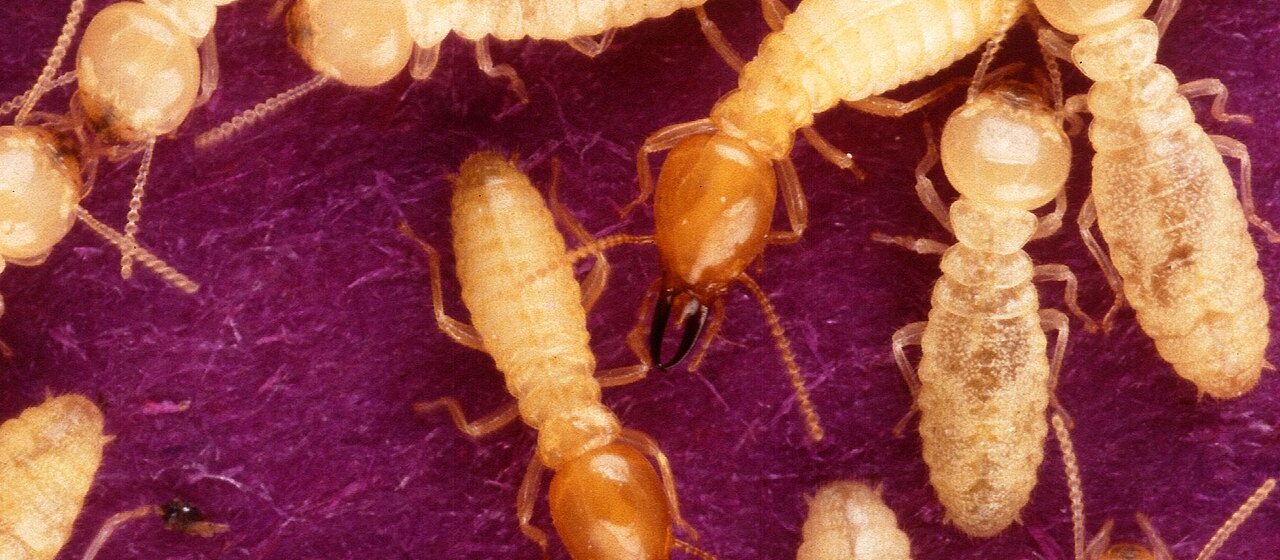
Termites work quietly. They eat wood from the inside out, avoid light and open air, and can go unnoticed for years while they damage framing, subfloors and trim. By the time a door starts sticking or a floor feels spongy, the colony may have been feeding for a long time. That is why knowing the early warning signs, and having your home inspected regularly, matters so much.
This guide covers the signs homeowners most often miss, how the three main termite groups in the United States differ, what a professional inspection involves, and how liquid barriers, bait systems and fumigation compare.
- Swarmers indoors, mud tubes on the foundation, pellet-like frass and hollow-sounding wood are the main warning signs.
- Subterranean termites need soil contact and moisture; drywood termites live entirely inside dry wood.
- Treatment depends on the species: soil treatments and baits for subterranean, localized treatment or fumigation for drywood.
- Reducing wood-to-soil contact and moisture around the foundation is the most effective prevention you can do yourself.
The Top Termite Warning Signs
1. Swarmers and discarded wings
Mature colonies send out winged reproductives, called swarmers or alates, to start new colonies. Many subterranean species swarm in spring, often on a warm day after rain, while some drywood species swarm in late summer or fall. Swarms indoors, especially near windows, doors and light fixtures, strongly suggest a colony in or under the structure. Swarmers shed their wings soon after landing, so piles of small, identical wings on windowsills or floors are an important clue even if you never saw the swarm.
Termite swarmers are often confused with flying ants. Termites have straight antennae, a thick waist and two pairs of wings of equal length. Flying ants have elbowed antennae, a pinched waist and front wings longer than the hind wings. If you are unsure, save a few specimens in a sealed bag for an inspector. Our ant control guide covers what to do if they turn out to be ants.
2. Mud tubes
Subterranean termites build pencil-width tunnels of soil, saliva and debris to travel between the soil and wood while staying protected from dry air and predators. Look for them on foundation walls, piers, crawl space supports, slab edges, behind siding and in the garage. Break open a section; if you see small cream-colored insects, or the tube is rebuilt within days, the colony is active.
3. Frass (termite droppings)
Drywood termites push their fecal pellets out of small “kick-out” holes in the wood. The result is small piles of hard, six-sided pellets that look like coarse sand or ground pepper, often beneath furniture, window frames, attic framing or baseboards. Subterranean termites do not leave frass piles; they use their waste to build tunnels.
4. Hollow or damaged wood
Tap wood with the handle of a screwdriver. Termite-damaged wood often sounds hollow or papery and may crumble when probed. Subterranean damage typically follows the softer springwood, leaving a layered, honeycomb pattern lined with soil. Drywood damage cuts across the grain and leaves smooth, clean galleries.
5. Other subtle clues
- Bubbling or blistering paint, or paint that looks water-damaged without a leak.
- Doors and windows that suddenly stick or no longer close properly.
- Buckling laminate or wood floors, or baseboards that crush easily.
- Pinholes in drywall or tiny lines that look like tracks under the paint.
Subterranean vs Drywood vs Dampwood Termites
Identification drives treatment, so it helps to know which group you are dealing with. Regional patterns vary; you can read more about each in our pest library.
| Feature | Subterranean | Drywood | Dampwood |
|---|---|---|---|
| Where they live | Colonies in the soil; travel into wood through mud tubes | Entirely inside dry, sound wood; no soil contact needed | Inside wet, decaying wood, often with a leak or ground contact |
| US range | Found in nearly every state; the most widespread group | Mainly southern coastal states, the Southwest and California | Mainly the Pacific Coast and parts of the South |
| Key sign | Mud tubes, soil-lined damage, spring swarms | Piles of six-sided pellets (frass), kick-out holes | Large pellets and damage in rotted, wet wood |
| Colony size | Often very large | Relatively small, but a structure can hold many colonies | Moderate |
| Typical treatment | Liquid soil barrier, bait systems, or both | Spot treatment of infested wood or whole-structure fumigation | Fix the moisture problem, replace rotted wood, spot treatment |
Formosan subterranean termites, an invasive species established in parts of the Gulf Coast, Southeast and Hawaii, form especially large and aggressive colonies and can build nests above ground where moisture is available. If you live in an area where they are present, regular professional inspections are particularly important.
What a Professional Termite Inspection Covers
A thorough inspection looks at the entire structure, inside and out, with attention to areas homeowners rarely see. Expect the inspector to:
- Walk the exterior foundation looking for mud tubes, wood-to-soil contact, cracks, moisture issues and stored wood against the house.
- Inspect the crawl space or basement, including sill plates, joists, piers and plumbing penetrations.
- Check the garage, attic, eaves and window frames, especially for drywood frass.
- Look at interior baseboards, door frames and areas near plumbing for damage and moisture.
- Probe and sound suspect wood and, in some cases, use moisture meters to find conditions termites favor.
- Document findings, identify the species if activity is found, and explain treatment options.
Most experts recommend an inspection once a year in areas with significant termite pressure, and before buying a home. Our termite inspection and treatment service follows this approach.
Treatment Options
Liquid soil treatments (barriers)
For subterranean termites, a liquid termiticide is applied to the soil around and beneath the foundation, usually by trenching along the exterior and drilling through slabs, porches or patios where needed. Modern non-repellent termiticides are designed so termites do not detect them; foraging termites pass through treated soil, pick up the product and can transfer it to nestmates. A properly applied soil treatment typically provides protection for several years, depending on the product, soil conditions and label rates.
Bait systems
Bait stations are installed in the soil at intervals around the home. Termites find and feed on a cellulose bait containing a slow-acting active ingredient, often an insect growth regulator that prevents molting, and share it through the colony. Baits use a small amount of active ingredient and avoid drilling, but they work more slowly than liquid treatments and require ongoing monitoring and servicing. Some homeowners combine baits with a liquid treatment in high-risk areas.
Localized (spot) treatment
Drywood infestations confined to a known, accessible area can sometimes be treated by injecting products directly into galleries, or with localized methods such as heat, depending on the provider. Spot treatments are only as good as the inspection; hidden colonies elsewhere in the structure are not affected.
Structural fumigation
When drywood termites are widespread or hard to reach, the entire structure is sealed under tarps and filled with a gas fumigant that penetrates all wood. Occupants, pets and plants must leave, and food and medicine must be bagged or removed as instructed. The home stays vacant until certified aeration and clearance. Fumigation eliminates the colonies present but does not leave residual protection, so preventive steps still matter.
| Method | Best for | Speed | Ongoing service |
|---|---|---|---|
| Liquid soil barrier | Subterranean termites, especially active infestations | Fast; colonies typically decline within weeks to a few months | Periodic inspections; retreatment per label and contract |
| Bait system | Subterranean termites; sites where drilling is impractical | Slower; can take months | Regular station monitoring and bait replacement |
| Spot treatment | Small, accessible drywood infestations | Immediate in treated area | Re-inspection recommended |
| Fumigation | Widespread or inaccessible drywood infestations | Typically a few days including aeration | No residual; prevention and inspections afterward |
Termiticides and fumigants are regulated products, and many are restricted to licensed applicators. Do not attempt soil drilling, trenching around utilities or any form of fumigation yourself. Never enter a structure under fumigation before it has been cleared. If you use any over-the-counter termite product, follow the label exactly and check local regulations. Damaged structural wood should be evaluated by a qualified contractor before repairs.
Termite Prevention: What You Can Do
- Control moisture. Keep gutters clean, extend downspouts away from the foundation, grade soil to slope away from the house and repair leaking pipes and AC condensate lines.
- Eliminate wood-to-soil contact. Keep siding, door frames and wood trim at least several inches above soil. Use concrete or metal bases for posts and deck supports where possible.
- Move firewood and lumber away from the house and off the ground.
- Manage mulch. Keep a mulch-free strip next to the foundation and avoid piling mulch against siding.
- Ventilate crawl spaces and address standing water or high humidity under the home.
- Seal cracks and gaps in the foundation and around utility penetrations.
- Remove stumps, roots and buried wood debris near the house.
- Schedule regular inspections, ideally on a calendar alongside other seasonal maintenance; see our seasonal pest control calendar.
Frequently Asked Questions
Does seeing swarmers mean my house has termites?
Swarmers inside the home strongly suggest a colony in or beneath the structure. Swarmers seen outdoors, such as on a tree stump or woodpile, may come from a colony nearby rather than the house itself. Either way, it is worth scheduling an inspection.
Can I treat termites myself?
Some over-the-counter products exist, but effective subterranean treatment requires specialized equipment, large volumes of termiticide and precise application around the entire foundation. Fumigation must be done by licensed professionals. DIY attempts often miss parts of the colony, which can delay proper treatment.
How fast do termites damage a house?
It varies with species, colony size, climate and the wood involved. Damage usually builds slowly, over months to years, which is why early detection through annual inspections is so valuable. Formosan colonies can cause damage faster than most native species.
Are termite swarmers dangerous to people?
No. Swarmers do not bite or sting and do not damage wood themselves. Vacuum them up, save a few for identification, and focus on finding the colony they came from.
Should I get a termite inspection before buying a home?
Yes. Many lenders require a wood-destroying insect inspection in certain areas, and even when it is not required, it can reveal active infestations or past damage that affects your decision and negotiation.
Spotted Mud Tubes or Wings? Get an Inspection
ETAAC Pest Control connects you with local contractors who can inspect your home, identify the termite species and explain your treatment options clearly. Call us 9AM–6PM or request a free quote online.