
Mosquitoes can turn a backyard from a place you enjoy into one you avoid every evening. The frustrating part is that many homeowners fight them in the wrong place: swatting and spraying adults while the next generation develops in a clogged gutter or a forgotten bucket a few feet away. Because most backyard mosquitoes travel relatively short distances from where they hatched, what you do on your own property makes a real difference.
This guide explains how the mosquito life cycle works, how to eliminate and treat breeding water, when barrier treatments make sense, how to choose a repellent, and how to build a season-long plan that keeps bites down.
- Mosquitoes need standing water to breed, and in warm weather they can go from egg to biting adult in about a week. Removing water is the single most effective step.
- Container-breeding species can develop in as little as a bottle cap of water, so small sources matter.
- Bti larvicide treats water you cannot drain. It targets mosquito larvae and, used per label, has low risk to people, pets, fish and wildlife.
- Barrier sprays on resting vegetation reduce adults for a few weeks, but must be applied carefully to protect pollinators.
- Use an EPA-registered repellent such as DEET, picaridin, IR3535 or oil of lemon eucalyptus when outdoors at peak times.
Understanding the Mosquito Life Cycle
Every mosquito goes through four stages, and the first three happen in water.
- Egg. Depending on species, eggs are laid singly on the water surface, in floating rafts, or on damp surfaces just above the waterline in containers. Aedes eggs, including those of the Asian tiger mosquito, can survive dry for months and hatch when rain refills the container.
- Larva. Larvae (“wigglers”) hang from the water surface to breathe and feed on organic matter. This stage lasts several days in warm weather.
- Pupa. Pupae (“tumblers”) do not feed. Within a day or few, the adult emerges.
- Adult. Only females bite, because they need a blood meal to produce eggs. Both sexes feed on plant nectar. A female can lay several batches of eggs in her lifetime.
In summer heat, the whole cycle can take about 7 to 10 days. That is why weekly water checks are the standard recommendation: dumping water once a week interrupts the cycle before adults emerge.
Know your backyard mosquitoes
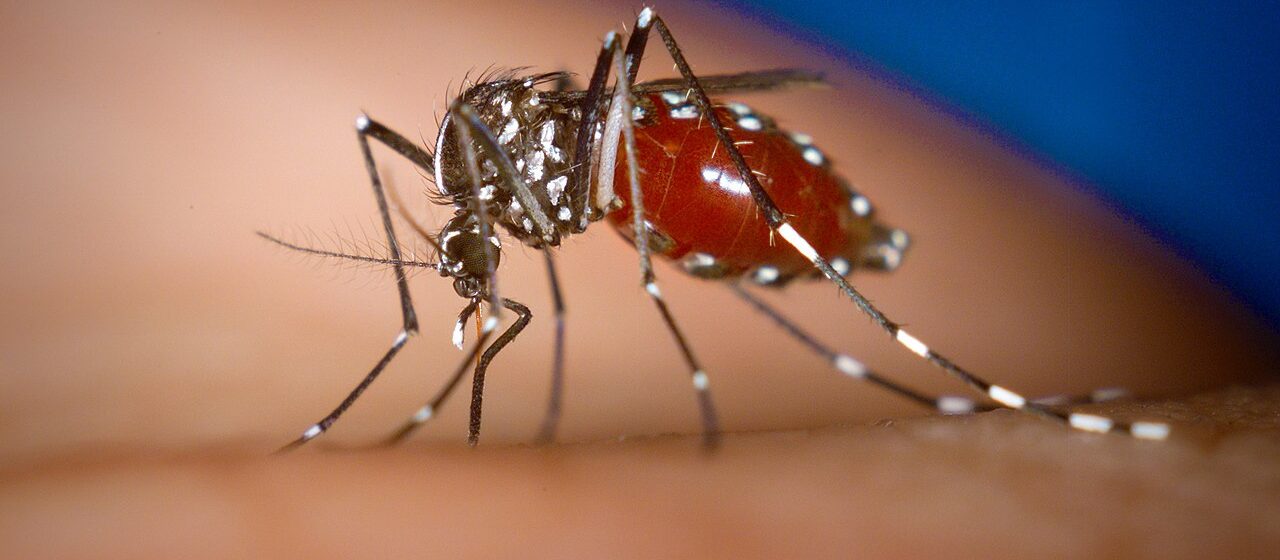
The Asian tiger mosquito (black with white stripes) and related Aedes species bite aggressively during the day and breed in containers. Culex mosquitoes bite mainly from dusk through the night and prefer stagnant, nutrient-rich water such as clogged gutters, storm drains and neglected pools. Knowing which type you have helps you time protection and target breeding sites. Our pest library has more on common species.
Eliminate Standing Water: Your Weekly Checklist
Walk your property once a week, ideally after rain, and look for anything that holds water for more than a few days.
- Containers: buckets, flower pot saucers, watering cans, children’s toys, wheelbarrows, tarps, old tires and trash can lids. Empty, turn over or store under cover.
- Gutters and downspouts: clogged gutters are one of the most overlooked breeding sites. Clean them in spring and fall and check that they drain.
- Birdbaths and pet bowls: scrub and refill at least weekly. Scrubbing removes eggs stuck to the sides.
- Rain barrels: fit with tight lids and fine mesh screens over openings, or treat with Bti.
- Pools and hot tubs: keep them chlorinated and circulating; drain water from pool covers.
- Yard drainage: fill low spots, fix leaking outdoor faucets and AC condensate puddles, and make sure corrugated downspout extensions are not holding water.
- Plants: bromeliads and tree holes collect water. Flush bromeliads weekly; fill tree holes with sand or mortar where appropriate.
- Hidden spots: water meter boxes, French drain grates, sagging boat covers and the space under decks.
Larvicides: Treating Water You Can’t Drain
Ornamental ponds, rain barrels, drainage ditches and other permanent water need a different approach. Larvicides kill mosquitoes before they can fly and bite.
- Bti (Bacillus thuringiensis subsp. israelensis). A naturally occurring soil bacterium that produces toxins activated in the gut of mosquito larvae. It is sold as slow-release “dunks” and granules or “bits.” Bti affects mosquito, black fly and fungus gnat larvae, and when used according to the label it is considered low risk to people, pets, fish, birds and beneficial insects. Dunks typically last around 30 days; check the product label.
- Methoprene. An insect growth regulator that prevents larvae from developing into adults. Available in briquets and granules for longer-lasting control.
- Mosquito fish and pond circulation. In ornamental ponds, aerators, fountains and fish that eat larvae help. Check state rules before introducing Gambusia, which are restricted in some areas because they can harm native species.
Barrier Treatments for Adult Mosquitoes
Adult mosquitoes spend daylight hours resting in shady, humid vegetation: under shrubs, in tall grass and ground cover, beneath decks and along fences. Barrier treatments apply a residual insecticide to these resting surfaces, so mosquitoes that land there pick up a lethal dose.
- Synthetic pyrethroids (such as bifenthrin or lambda-cyhalothrin) are the most common active ingredients in professional barrier treatments. Residual activity commonly lasts a few weeks, so programs typically involve repeat applications through the season, as permitted by the label.
- Botanical or essential-oil products have shorter residual activity and generally need more frequent application.
- Coverage matters more than volume. The undersides of leaves and dense shade are where it counts.
Barrier sprays should complement, not replace, source reduction. If a neighbor’s yard is a breeding ground, a barrier treatment will knock down adults coming over, but they will keep arriving. Professional services from our general pest control network can combine source inspection, larviciding and targeted barrier treatments.
Many insecticides used for adult mosquitoes are highly toxic to bees and aquatic life. Never spray flowering plants or allow drift onto blooms, avoid application when pollinators are active, and keep products away from ponds, streams and storm drains. Follow the label exactly, including re-entry times for people and pets. Keep foggers and sprays away from children, and never use products indoors unless the label permits it. If you develop fever, severe headache, body aches, rash or confusion after mosquito bites, see a doctor promptly and mention your exposure.
Comparing Mosquito Control Methods
| Method | Targets | How long it lasts | Pros | Limitations |
|---|---|---|---|---|
| Eliminating standing water | Eggs, larvae, pupae | Ongoing; repeat weekly | Free, most effective long-term step, no chemicals | Requires consistency; cannot remove neighbors’ sources |
| Bti dunks or bits | Larvae | About 30 days for dunks; shorter for granules (per label) | Highly selective, low risk to non-target animals | Only works in water; does not affect adults |
| Methoprene briquets | Larvae and pupae (prevents emergence) | Weeks to months depending on formulation | Long-lasting in permanent water | Does not kill adults; dead larvae not always visible |
| Barrier spray on vegetation | Resting adults | Often a few weeks | Noticeable fast reduction in bites | Pollinator and aquatic toxicity concerns; must be repeated |
| Mosquito traps (CO2 or lure-based) | Host-seeking adults | Continuous while running | No spraying | Results vary; may not reduce bites much without other steps |
| Personal repellents | Biting adults | Hours, depending on product and concentration | Direct protection for people | Must be reapplied; does not reduce population |
| Fans on patios | Adults near people | While running | Simple; mosquitoes are weak fliers | Only protects a small area |
Choosing an EPA-Registered Repellent
The US Environmental Protection Agency evaluates repellents for safety and effectiveness when used as directed. Look for these active ingredients:
- DEET: long track record; higher concentrations last longer but do not protect better per application.
- Picaridin: nearly odorless, non-greasy, and does not damage plastics or synthetic fabrics the way DEET can.
- IR3535: a mild option found in several combination sunscreen-repellent products.
- Oil of lemon eucalyptus (OLE) or PMD: a plant-derived option, but not for children under 3 years old.
- 2-undecanone: derived from a plant compound and found in some products.
Apply sunscreen first and repellent second. Do not apply repellent under clothing or on cuts. Adults should apply it to children’s hands and then to the child, avoiding eyes and mouth. Public health guidance advises against using insect repellent on babies younger than 2 months; use netting instead. Permethrin-treated clothing offers additional protection but is not applied to skin.
Mosquito-Borne Diseases in General Terms
In the continental United States, West Nile virus is the most commonly reported mosquito-borne disease. Most infected people have no symptoms, some develop fever and flu-like illness, and a small percentage develop serious neurological illness, with older adults and people with weakened immune systems at higher risk. Other mosquito-borne viruses, such as Eastern equine encephalitis and La Crosse encephalitis, are less common but can be serious. Dengue, Zika and chikungunya are mostly associated with travel, though local transmission has occurred in some southern states and US territories. Mosquitoes also transmit heartworm to dogs and cats, so talk to your veterinarian about prevention. If you feel ill after bites, see a doctor; only a medical professional can diagnose these infections.
A Season-by-Season Mosquito Plan
Late winter and early spring
- Clean gutters, store or flip containers, repair screens and fix yard drainage.
- Plan larvicide treatment for ponds, rain barrels and drainage areas.
Late spring
- Start weekly standing-water checks as temperatures rise.
- Place Bti dunks in permanent water and set a reminder to replace them.
- Trim dense shrubs and mow tall grass to reduce resting sites.
Summer
- Continue weekly checks, especially after storms.
- Consider barrier treatments on a regular schedule during peak season.
- Use repellent and avoid peak biting times for the species in your area.
Fall
- Keep up checks until the first hard frosts; in southern states, mosquitoes can stay active much of the year.
- Clean gutters after leaves drop and store containers for winter.
For other pests to watch through the year, see our seasonal pest control calendar.
Frequently Asked Questions
Do citronella candles and bug zappers work?
Citronella candles offer limited protection only very close to the flame. Bug zappers kill many insects, but mosquitoes make up a small share of the catch, and they can kill beneficial insects. Fans, repellents and source reduction are more reliable.
Is Bti safe for my birdbath or pond with fish?
Bti products labeled for those uses are considered low risk to fish, birds, pets and people because they specifically target mosquito, black fly and fungus gnat larvae. Follow label dosage. For birdbaths, simply changing the water weekly also works.
How often should a mosquito barrier treatment be applied?
Many programs repeat treatments every few weeks during the mosquito season, but intervals depend on the product label, weather and local conditions. Heavy rain can shorten effectiveness.
Why do I still have mosquitoes after removing standing water?
Mosquitoes may be breeding in hidden spots such as gutters, drains or under decks, or flying in from neighboring properties. Recheck your yard carefully, consider talking with neighbors, and contact your local mosquito control district if one exists.
Can mosquitoes breed in my lawn?
A healthy lawn that drains well does not hold water long enough. Low areas that stay flooded for several days after rain can produce mosquitoes, so improve drainage in those spots.
Take Your Yard Back This Season
A local ETAAC contractor can inspect your property for breeding sites, treat standing water and set up a seasonal barrier plan that follows label directions and protects pollinators. Tell us about your yard and we will match you with a pro nearby.