
Few things make a kitchen feel less like home than a cockroach darting under the stove when you flip on the light. Roaches are fast breeders, they hide in gaps barely thicker than a credit card, and many common sprays simply scatter them deeper into walls. The good news is that most household infestations can be knocked down and kept down with the right combination of identification, sanitation, targeted baits and patience.
This guide covers the three roach species most common indoors in the United States, how to gauge your problem, and a step-by-step plan that mirrors what technicians do on a service visit.
- Identify the species first: German roaches need a very different approach than American or Oriental roaches.
- Sanitation and moisture control make every treatment work better; baits fail when roaches have easier food to eat.
- Gel baits plus an insect growth regulator (IGR) usually outperform broadcast sprays and foggers indoors.
- Roaches seen in daytime, in multiple rooms or in a multi-unit building usually signal a heavy infestation that warrants professional help.
Know Your Roach: German vs American vs Oriental
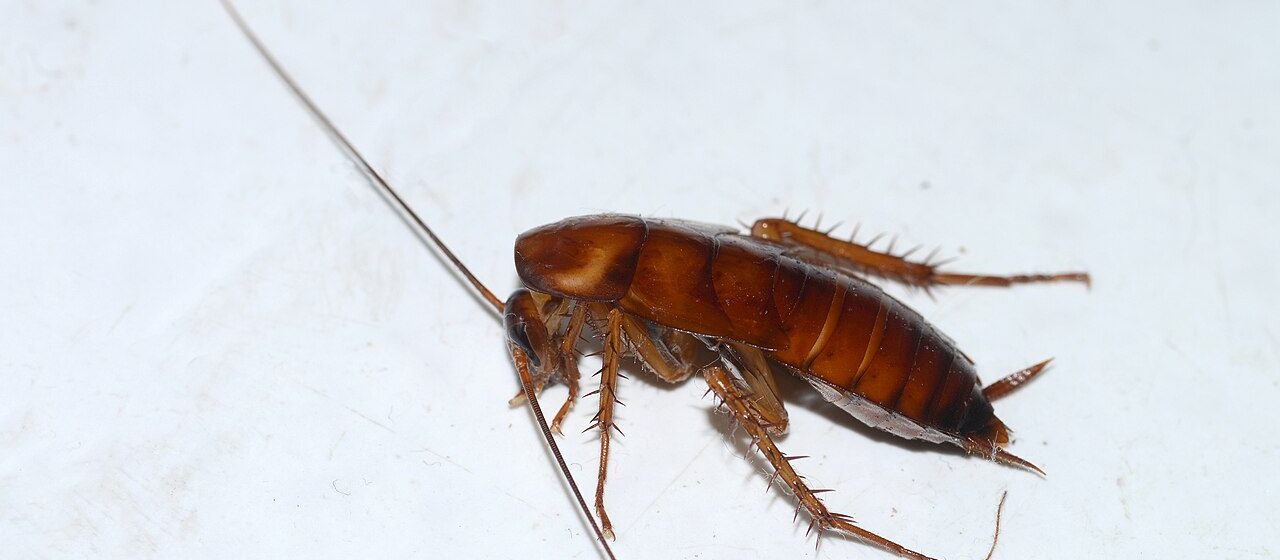
Treatment starts with identification. A small tan roach in a kitchen cabinet and a large reddish roach coming up a floor drain are different animals with different habits, and they respond differently to control efforts. Our pest library has more photos, but the table below covers the essentials.
| Feature | German cockroach | American cockroach | Oriental cockroach |
|---|---|---|---|
| Adult size | About 1/2 to 5/8 inch | About 1-1/2 to 2 inches | About 1 to 1-1/4 inches |
| Color and markings | Light brown to tan with two dark parallel stripes behind the head | Reddish brown with a yellowish band around the shield behind the head | Very dark brown to shiny black |
| Where you find them | Kitchens and bathrooms, inside cabinets, appliances, electronics | Basements, boiler rooms, sewers, drains, crawl spaces | Damp, cool areas: basements, floor drains, under porches, leaf litter |
| Typical origin | Lives entirely indoors; often carried in on boxes, bags, used appliances | Wanders in from sewers, drains and outdoor areas | Enters from outdoors through gaps, drains and door thresholds |
| Reproduction | Fastest of the three; several generations per year | Slower; long-lived adults | Slowest; often seasonal |
| Best primary strategy | Gel baits, IGRs, deep sanitation, crack-and-crevice treatment | Exclusion, drain care, perimeter treatment, baits | Moisture reduction, exclusion, perimeter treatment, baits |
German cockroaches are behind most persistent indoor infestations. Females carry their egg capsule until it is nearly ready to hatch, protecting the eggs from many treatments, and one capsule can hold dozens of nymphs. American and Oriental roaches, often called “water bugs” or “palmetto bugs,” are usually outdoor invaders looking for moisture; an occasional one is not the same as an indoor breeding population.
Signs You Have a Cockroach Problem
Roaches are nocturnal and secretive, so by the time you notice them the population is often larger than it looks. Watch for these signs:
- Droppings: German roach droppings look like black pepper or coffee grounds, clustered in cabinet hinges and drawer tracks. Larger species leave ridged, cylindrical pellets.
- Smear marks: Dark streaks along wall-floor junctions and around openings roaches travel through.
- Egg capsules (oothecae): Small brown, purse-shaped cases tucked into cracks and under shelves.
- Shed skins left behind as nymphs molt.
- Odor: Heavy infestations produce a musty, oily smell.
- Daytime sightings: Roaches normally hide by day; seeing them in daylight usually means harborage is crowded.
To gauge activity, place sticky monitoring traps flat against walls under the sink, behind the refrigerator, beside the stove and in the bathroom. Check them after two or three nights. The spot with the most catches is where treatment should concentrate.
Step 1: Sanitation and Moisture Control
Every roach control program that works long term starts here. Baits compete with whatever else roaches can eat, so a greasy stovetop or a pet bowl left out overnight can undermine a professional-grade product.
- Deep clean the kitchen once. Pull out the stove and refrigerator, vacuum crumbs and droppings, and degrease appliance sides, cabinet faces and the backsplash.
- Vacuum visible roaches and debris with a crevice tool, then empty the vacuum into a sealed bag outdoors.
- Store food, including pet food, in hard containers with tight lids.
- Remove water sources: fix drips and leaks, wipe the sink dry at night and insulate sweating pipes.
- Take trash out nightly, use a lidded can and rinse recyclables.
- Reduce clutter. Cardboard and paper stacks are prime harborage; switch to plastic bins.
Step 2: Seal Entry Points and Harborage
For American and Oriental roaches, keeping them out matters as much as killing them. For German roaches, sealing cracks reduces hiding spots and pushes them toward your baits.
- Install door sweeps and repair weatherstripping on exterior doors.
- Caulk gaps around baseboards, backsplashes, countertops and cabinet edges.
- Seal pipe and wire penetrations under sinks and behind toilets with caulk or expanding foam.
- Keep floor drains covered or flushed regularly with water so the trap does not dry out; use drain covers in basements.
- Outdoors, pull mulch and leaf litter a foot or more back from the foundation and fix downspouts that pool water near the house.
Step 3: Use Baits and Gels the Right Way
Gel baits are the backbone of modern roach control. Roaches eat the bait and return to hiding, where the active ingredient can spread to others through droppings and contact. Baits also mean less exposure for people and pets than broad sprays.
How to place gel bait
- Apply small, pea-sized dots rather than long beads. Many small placements beat a few large ones.
- Place bait where roaches live, not where you happen to see them: cabinet hinges, the corners of drawers, behind the refrigerator, around the dishwasher, under the sink near pipe penetrations, and around the stove.
- Keep bait away from surfaces you clean often and from areas you have sprayed. Repellent sprays and cleaners can contaminate bait and make roaches avoid it.
- Recheck in a week. If bait is gone, reapply. If it has dried out or is untouched, move it closer to activity.
Rotate bait formulations
Some German cockroach populations develop bait aversion or resistance to a particular active ingredient. If a bait is untouched after a week in an active area, switch to a product with a different active ingredient and bait matrix. Professionals routinely rotate baits for this reason.
Bait stations
Enclosed bait stations are a good option in homes with small children and pets, and they work well for larger roaches along baseboards and in garages. Place them flat against walls and corners where roaches travel.
Step 4: Add an Insect Growth Regulator
An insect growth regulator (IGR) does not kill adults quickly. Instead, it interferes with development so nymphs cannot mature into reproducing adults, and it can affect the viability of eggs. Pairing an IGR with baits is one of the most effective ways to break the German cockroach breeding cycle, especially since egg capsules shield developing nymphs from many treatments. IGRs come as point-source discs placed in cabinets and as concentrates or aerosols applied to cracks and voids. Follow the label for placement and reapplication intervals.
Step 5: Sprays, Dusts and Foggers: What Actually Helps
It is tempting to grab an aerosol and spray every roach you see. In practice, sprays are a supporting tool at best.
- Contact sprays kill the roach you hit but not the population in the walls, and repellent residues can scatter German roaches and interfere with baits.
- Total-release foggers (“bug bombs”) do not reach roaches deep in cracks, can push them into adjoining rooms or units, and are a fire hazard near pilot lights. Most professionals discourage them.
- Insecticidal dusts such as boric acid or diatomaceous earth work when applied as a very light film into voids and under appliances. Roaches avoid heavy piles.
- Exterior perimeter treatments help against American and Oriental roaches entering from outdoors.
Read and follow every product label; the label is the legal instruction for use. Keep baits, dusts and sprays out of reach of children and pets, never apply insecticides to food-prep surfaces, dishes or utensils, and do not mix products. Do not use foggers near pilot lights or other ignition sources. Cockroach droppings and shed skins are a recognized trigger for allergies and asthma; wear a dust mask when vacuuming heavy debris, and see a doctor if anyone in the household has worsening breathing symptoms.
How Long Does It Take?
With good sanitation and baiting, activity should drop noticeably within one to two weeks, though nymphs from protected egg capsules keep appearing for several weeks. Continue baiting until monitoring traps stay empty for a few weeks. Heavy German roach infestations often take one to three months.
When to Call a Professional
DIY methods can work for a light infestation caught early. Consider calling a pro if any of the following apply:
- You see roaches during the day, or in bedrooms and living areas, not just the kitchen.
- Monitoring traps fill up within a night or two.
- You have baited consistently for three to four weeks with no clear improvement.
- You live in a multi-unit building where neighbors also have activity; roaches travel through shared walls and plumbing, so coordinated treatment matters.
- Someone in the household has asthma or allergies and you want to minimize exposure.
A technician brings a wider range of bait formulations, IGRs and dusts, plus the experience to find harborage you might miss. Our general pest control service includes an inspection, targeted treatment and follow-up visits. If you are weighing providers, our guide on how to choose a pest control company lists the questions worth asking.
Keeping Roaches From Coming Back
Once activity stops, keep a few monitoring traps in the kitchen and bathroom and check them monthly. Inspect delivery boxes and secondhand appliances before bringing them inside, and keep up with cleaning, leak repairs and door sweeps. A seasonal pest control calendar can help you schedule these checks alongside other routine home maintenance.
Frequently Asked Questions
Does seeing one cockroach mean I have an infestation?
Not necessarily. A single large American or Oriental roach may have wandered in from outdoors or a drain. A small tan German roach indoors is more concerning because that species lives and breeds inside. Set out sticky monitoring traps for a few nights to find out whether there is more activity.
Are cockroaches a sign of a dirty home?
No. Clean homes get roaches too, especially German roaches carried in on boxes or appliances, and in apartments where they move between units. That said, food residue, grease and moisture help a population grow and make treatments less effective, so sanitation is still essential.
Do bug bombs get rid of cockroaches?
Generally not. Fogger mist settles on exposed surfaces and does not reach roaches hiding in cracks, wall voids and appliances. Foggers can scatter roaches into new areas and contaminate baits. Targeted gel baits, IGRs and crack-and-crevice treatments are far more effective.
Is boric acid safe to use around pets and kids?
Boric acid is lower in toxicity than many insecticides but is not harmless if ingested. Apply it only as a light dust into cracks, voids and under appliances where children and pets cannot reach it, and follow the product label exactly.
Why do I still see small roaches after treatment?
Egg capsules hatch on their own schedule and are protected from many products, so seeing small nymphs for several weeks is normal. They should decline steadily as they encounter baits and the IGR prevents them from maturing. If numbers are not falling after three to four weeks, the treatment plan needs adjustment.
Tired of Roaches? Let a Local Pro Handle It
ETAAC Pest Control connects you with local pest control contractors who can inspect your home, identify the species and build a targeted roach treatment plan with follow-up. Call us 9AM–6PM or request a free quote online.